To cut cabbage steaks, pull off the loose outer leaves, trim the root end so the head sits flat, then stand it on that flat end and slice from top to bottom, straight through the core, into even slabs between half an inch and an inch thick. The core is what holds each steak together, so every slice you want to keep whole needs a piece of it. The center slices will hold; the rounded ends will fall apart, and those go into slaw.
That is the whole technique. The rest is choosing the right head, keeping the knife steady through a dense vegetable and getting the slabs onto the sheet pan in one piece.
Choose the right cabbage
Green cabbage is the classic choice. Look for a head that is firm, tight and heavy for its size, with crisp outer leaves and no soft spots. Tightly packed leaves are what you want, because they give the core more to hold on to once the head is sliced.
Red cabbage cuts the same way and roasts to a deep purple. Loose-leaved cabbages such as napa and savoy are poor candidates for steaks; their layers separate as soon as they are sliced.
Set up before you cut
A whole cabbage is round, heavy and slippery on the outside. The first cut is the risky one, because a round head can roll under the knife.
- Use a long, sharp chef’s knife. An eight- to ten-inch blade can pass through the full height of the head in one stroke.
- Anchor the board. Lay a damp kitchen towel under it so it cannot slide.
- Make a flat base first. Never start slicing a round vegetable that can rock under the knife.
The pinch grip and the claw are worth a quick review before you start. A dense head needs steady pressure, and the claw keeps your fingertips tucked away from the blade.
Step by step
- Remove the outer leaves. Peel away any loose, dark or damaged outer leaves. They are often tough and they will not stay attached to the steaks.
- Trim the base. Slice a thin layer off the root end, only enough to expose a flat, pale circle of core. Leave the core itself in place.
- Stand the head on its flat end. The core now runs straight up through the middle, from your board toward the top of the head.
- Cut off the first rounded side. Slice straight down about an inch from the outer edge. This piece will not contain any core, so set it aside for slaw.
- Cut the steaks. Move the knife in by the thickness you want, half an inch to an inch, and slice straight down through the center of the head. Every slice that passes through the core will hold together.
- Stop at the other side. When you reach the last rounded section with no core in it, set that aside with the first one.
A typical head gives about six steaks, depending on its size and how thick you cut them.
How thick to cut them
Recipes range from half an inch to about an inch. The University of Maine Cooperative Extension’s roasted cabbage steak recipe slices the head from top to bottom into half-inch steaks. Chowhound, in a piece on keeping cabbage steaks from falling apart, recommends slices about an inch thick.
Half-inch steaks roast faster and brown more across the surface. Inch-thick steaks are sturdier and easier to move, with a softer, juicier center, but they need a longer roast. Thinner than half an inch, the slices have so little core that they come apart when you lift them.
Keep every slice the same thickness, whatever you choose. Even slices finish together, which is the same rule that applies to every tray of roasted vegetables. Sheet pan dinners explains why matching sizes matters.
Getting them onto the pan in one piece
Cabbage steaks are fragile until they are cooked. Slide a wide, thin spatula or the flat of your knife under each one and support it from below as you lift it. Do not pick them up by the edge.
Lay them flat on a rimmed sheet pan in a single layer. Brush on the oil with a gentle hand, so the bristles do not push the leaves apart.
Season and roast
Brush both sides of each steak with olive or canola oil, letting a little run down between the layers. Season with salt, black pepper and garlic powder; the Maine Extension recipe uses exactly that combination.
Roast at 400°F until the edges are deep brown and crisp and a knife slides through the core without resistance.
Published recipes run from about 15 to 30 minutes for half-inch steaks, so start checking at 15 and go by color and tenderness rather than the clock. Inch-thick steaks need longer; test the core with a knife before pulling the pan. Turning the pan halfway through helps the steaks brown evenly. Flipping them is optional, and every flip is one more chance for a steak to come apart.
A few finishes that work well:
- Lemon and parmesan. A squeeze of lemon and a handful of grated cheese in the last few minutes.
- Mustard butter. Melted butter whisked with whole-grain mustard, brushed on as the steaks come out.
- Smoked paprika and lime. Paprika with the salt before roasting, lime juice after.
- Balsamic. A light drizzle of balsamic vinegar right before serving.
Leftover roasted cabbage steaks keep in an airtight container in the refrigerator for up to four days. Reheat them in a hot oven or a skillet so the edges crisp again.
Use the ends
The two rounded sides you set aside are not waste. Lay each one flat side down, cut it into thin strips, and you have the start of a slaw. Toss it with a little vinegar, oil and salt for a side, or save it for tacos. How to shred cabbage for coleslaw covers the fine shred in detail.
Any steak that breaks apart on the way to the pan can still be roasted. It will brown into loose ribbons, which taste as good.
The board for the job
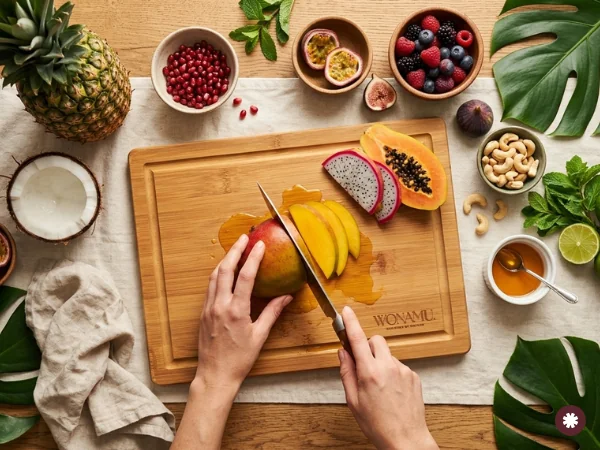
A whole cabbage needs a work surface large enough to hold the head, the finished steaks and the trimmings without crowding. The WONAMU. bamboo cutting board is 12 by 9 inches, room enough to stand a head on one side and lay out the slices on the other. Wash it with warm soapy water when you finish and dry it on edge.
Common mistakes
- Coring the cabbage first. Without the core, every steak becomes a pile of leaves.
- Slicing on a round side. The head rolls. Always trim a flat base.
- Cutting uneven slabs. Thin steaks burn while thick ones stay raw.
- Lifting by the edge. Support each steak from underneath.
The short version
Peel off the loose outer leaves, trim the root end flat and stand the head on it. Slice straight down through the core into even slabs, half an inch to an inch thick, keeping the core in every steak, and save the rounded ends for slaw.
Brush with oil, season with salt, pepper and garlic powder, and roast at 400°F until the edges are deeply browned and the core is tender, about 15 to 30 minutes for half-inch steaks and longer for thicker ones.
❋
WONAMU. makes a bamboo cutting board designed for daily prep, 12 × 9 inches, bamboo, with a perimeter juice groove. Available on Amazon.
Designed by nature.